


PROJECTS
Our projects reflect how we understand education: open, creative, and meaningful. They are initiatives that promote learning, encourage participation, and allow each child to grow by discovering their abilities.
READER WARS

In 3rd grade, our students experience the adventure of the Reader Wars project, a reading gamification proposal that transforms reading into an intergalactic journey full of challenges, discoveries, and excitement.
The project was created with the aim of promoting a love of reading and improving reading and math comprehension through games and storytelling. Each student is part of a space crew that must complete missions related to reading, writing, and math in order to continue advancing through the cosmos.
At each stage, students answer reading comprehension questions, accumulate points, solve puzzles, and work as a team to achieve new challenges. The activities, designed to be fun and cooperative, promote intrinsic motivation, individual responsibility, and team spirit.
In addition to improving language and math skills, Reader Wars reinforces values such as perseverance, cooperation, and personal growth, making each student feel like the protagonist of their own learning.
GIORGIOS'S PIZZA
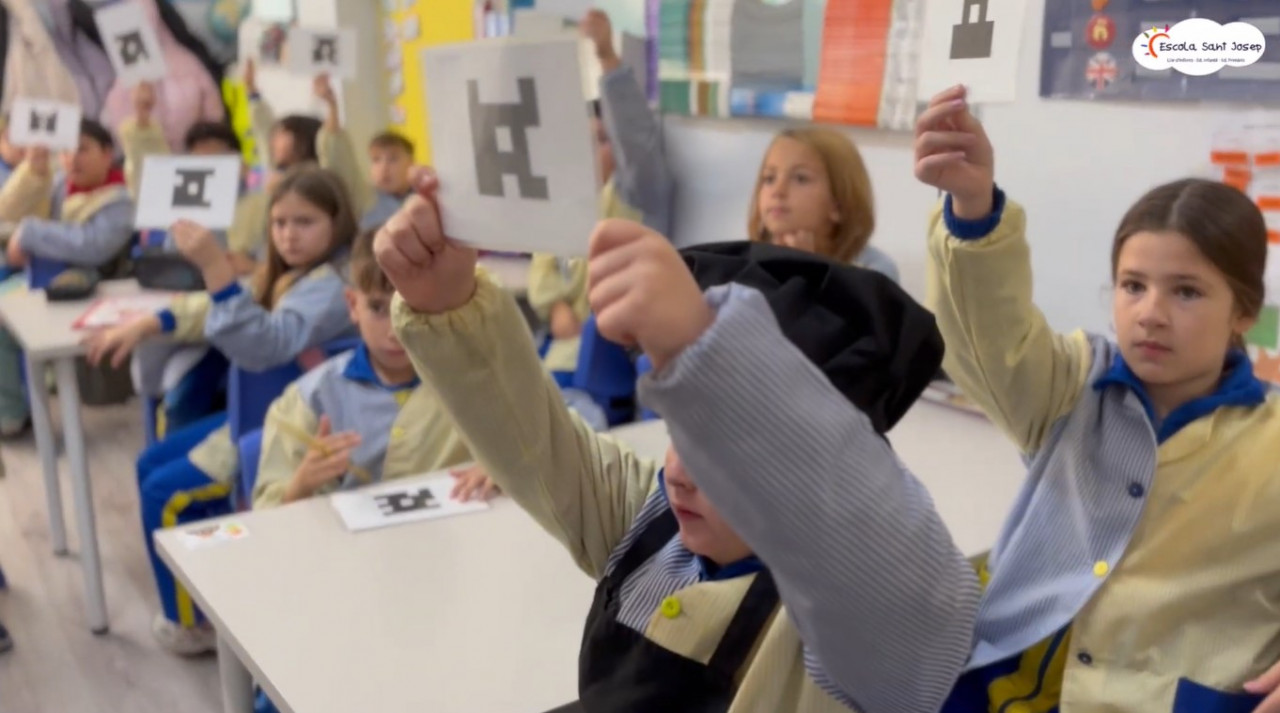
In 4th grade, our students become true entrepreneurs with the Giorgio's Pizza project, an educational gamification proposal that transforms the classroom into a pizzeria full of creativity, learning, and fun.
The project aims to improve reading comprehension, math skills, and cooperative work through games and simulations. Each group of students creates their own pizzeria and must make it profitable by overcoming challenges related to reading, vocabulary, and math operations with bills and coins.
At each session, teams accumulate points and symbolic "euros" that they can invest to grow their business. The activities, designed to be fun and realistic, promote cooperation, responsibility, and shared decision-making, all while connecting learning to everyday situations.
In addition to consolidating linguistic and mathematical skills, Giorgio's Pizza promotes values such as perseverance, personal initiative, and group cohesion, making each student the protagonist of a project that combines excitement, creativity, and meaningful learning.
XIC-I-MEDIA
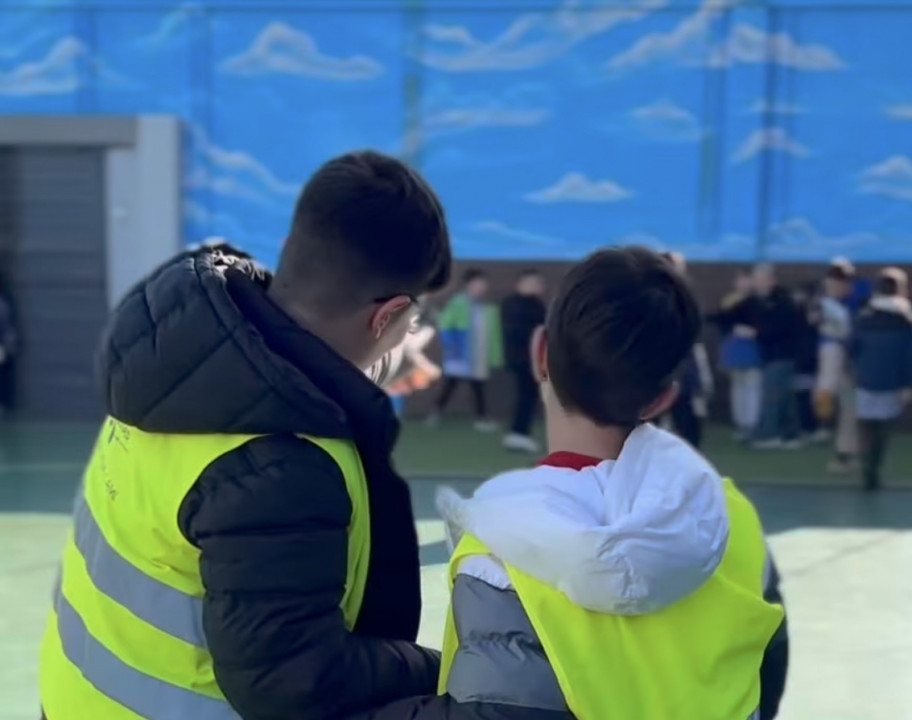
In Primary Education, our students learn that getting along well is also something that can be taught. The Xic-i-Mèdia Project is part of our P.A.U. Project (Practices of Full Attention and Body-Mind Union) and the Coexistence Plan, and aims to promote positive conflict resolution through dialogue, empathy, and shared responsibility.
In each class, there are two students trained as mediators, who are responsible for helping their classmates find solutions to minor conflicts that may arise during the day, especially in the playground. Using a simple and respectful protocol, the Xic-i-Mèdia listen to the parties involved, promote communication, and facilitate agreements that restore well-being and harmony.
This initiative allows children to take an active role in school peace, developing skills such as active listening, assertive communication, emotional regulation, and cooperation. It helps them understand that every conflict can be an opportunity to grow, repair, and strengthen bonds.
The Xic-i-Mèdia Project is, in essence, a living expression of our P.A.U. Project, where emotional education, mindful presence, and respectful coexistence become real paths to collective well-being.
REFASHION
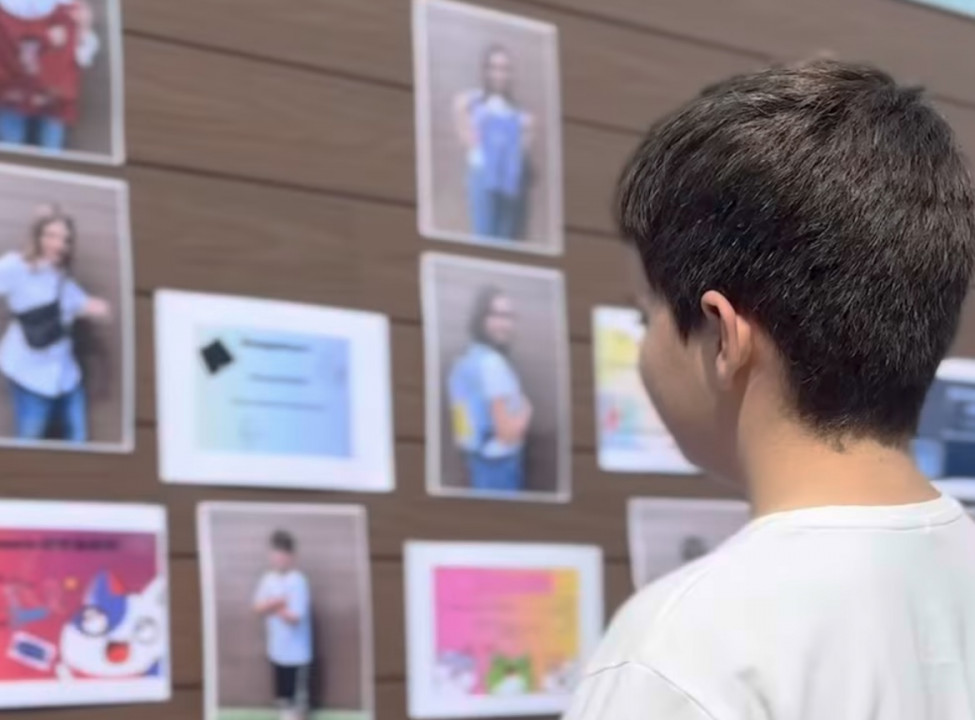
In 6th grade, our students participate in the ReFashion Project, a creative and sustainable initiative that encourages them to rethink their consumption of clothing and give new life to unused items.
During the project, children bring in pieces of clothing they no longer use and, with imagination, cooperation, and commitment, transform them into new designs full of color, personality, and meaning. Throughout the process, they learn to sew, cut, combine, and reinvent, developing creativity, fine motor skills, and environmental awareness.
Families play a very special role: they come to school to collaborate and help with the craft sessions, turning the classroom into an open workshop where young and old share skills, time, and emotions.
The project culminates with a large parade and charity market, where students present their creations to the entire educational community. This moment is a celebration of creativity, sustainability, and teamwork, reminding everyone that reusing is also a way to love the planet.
SDG PROJECT
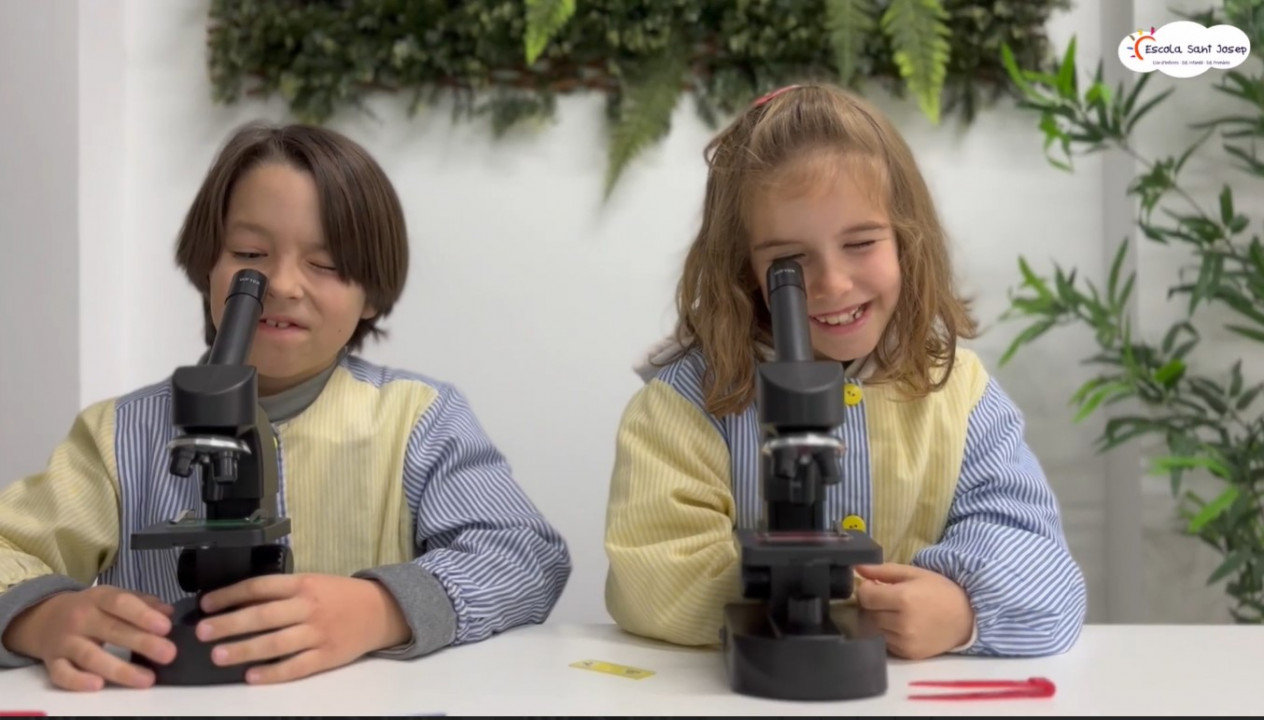
In Primary Education, we dedicate one hour per week to working on the Sustainable Development Goals (SDGs) through experiential, cooperative, and creative projects that connect learning with real life.
Each quarter, students focus on one or more SDGs—such as equality, sustainability, health, peace, or social justice—and carry out activities that help them understand the world's major challenges and discover that they too can be part of the change.
This weekly hour is a space for thinking, discussing, and acting: children investigate, propose ideas, create materials, participate in solidarity campaigns, and share initiatives with the entire educational community.
With this project, Escola Sant Josep aims to educate committed, empathetic, and conscious citizens who understand that every small action can have a big impact.
PODCAST
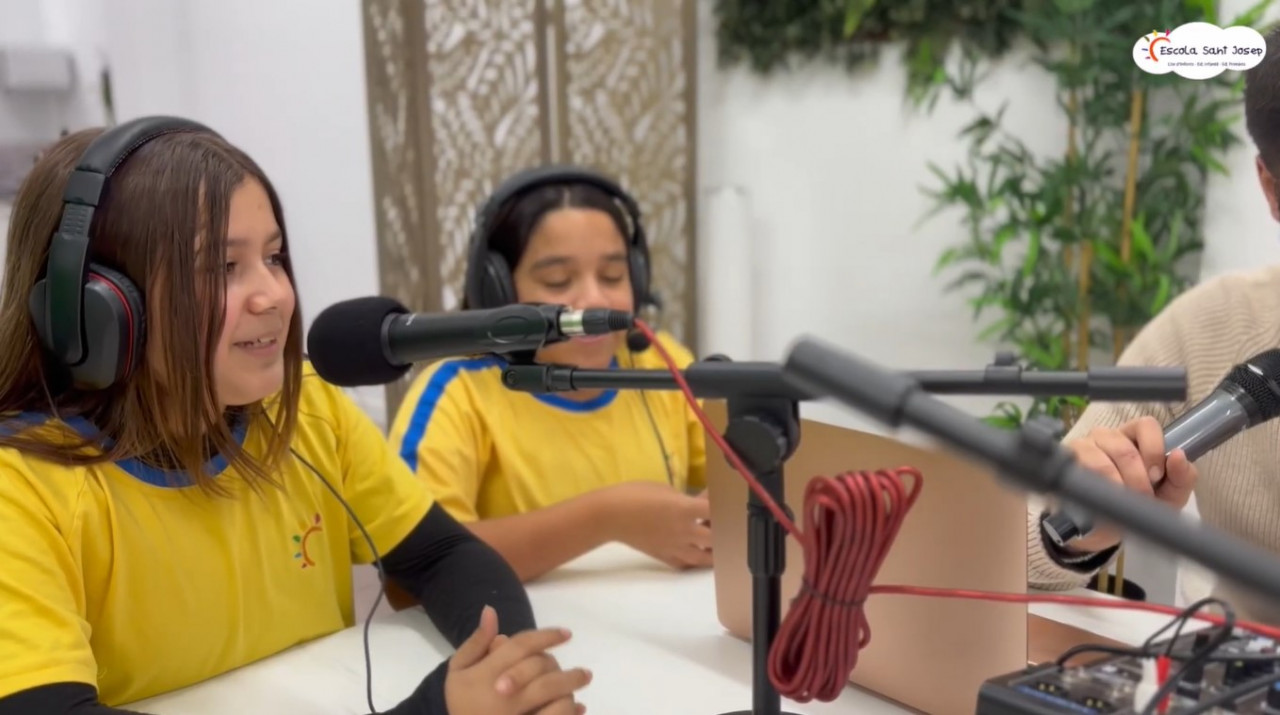
In 6th grade, students give voice to their ideas with the Sant Josep Podcast Project, an initiative that combines communication, creativity, and digital skills.
Every month, students independently prepare a short podcast on a different topic: current events, coexistence, values, the environment, or interesting facts about the world. From the script to the final recording, the teams organize themselves to plan content, write texts, practice expressive reading, and record their programs.
This experience encourages planning, responsibility, and oral expression, while also promoting confidence, creativity, and cooperative work. Students learn to listen to each other, respect the opinions of others, and communicate ideas clearly and respectfully.
In addition, the project helps develop key skills such as digital, linguistic, and social skills, while strengthening their autonomy and ability to organize themselves. The result is a lively and meaningful learning experience, where every voice counts and every program is a space to grow, share, and inspire.
PROJECT OF THE GARDEN
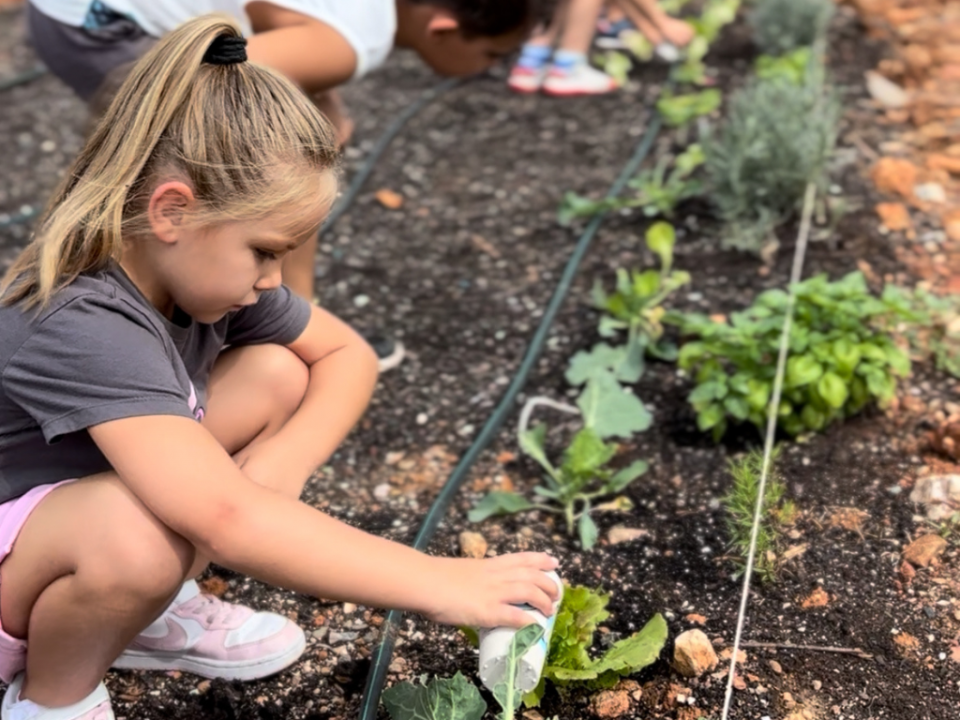
The school garden is one of the most cherished spaces at Escola Sant Josep. Located right next to the school, it is a living environment where children learn to observe, experiment, and connect with nature in a direct and meaningful way.
Each class participates by carrying out age-appropriate activities: preparing the soil, planting seeds, watering, caring for the plants, observing their growth, and harvesting the fruits. Through these experiences, students discover the value of patience, responsibility, and teamwork, while understanding the cycles of life and the importance of caring for the environment.
The garden is also a space for cross-curricular learning, where knowledge of science, languages, mathematics, and values come together. Children learn concepts in an experiential and applicable way, developing scientific curiosity, ecological awareness, and respect for nature.
In addition, working in the garden offers moments of calm and connection with oneself, promoting emotional well-being and the ability to observe our surroundings with attention and gratitude.
PROJECT P.A.U.
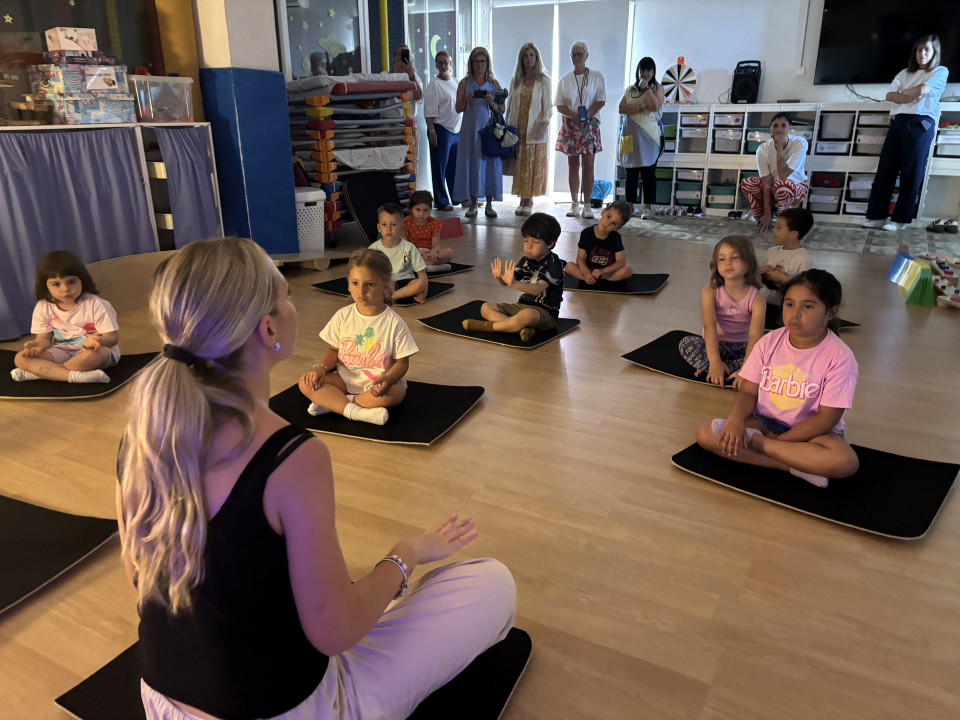
The P.A.U. Project is an initiative of the Sant Josep School that places emotional well-being at the center of learning. It stems from the conviction that education is not just about imparting knowledge, but also about accompanying people so that they learn to know themselves, to care for themselves, and to relate to others with respect and calm.
Through daily routines, mindfulness practices, and experiential activities, the project helps children identify, express, and manage their emotions, promoting concentration, coexistence, and classroom cohesion.
The P.A.U. is a cross-curricular project that extends from early childhood education to primary school, integrating itself into the daily routine of all classrooms. Through tuning in, quiet spaces, restorative circles, assemblies, and personal learning plans, it promotes values such as empathy, responsibility, self-regulation, and cooperation.
At Escola Sant Josep, we understand that well-being is the foundation of all learning. The P.A.U. Project reminds us that educating means sowing calm, listening, and presence so that every child can grow up with serenity, confidence, and joy.
SANT JOSEP FM

In 5th grade, students become real journalists, broadcasters, and producers with the Sant Josep FM Project, an initiative that turns the classroom into a real radio studio.
Each month, students prepare a new program cooperatively and independently: they select the news items, write the scripts, practice expressive reading, and record their own sections. The project promotes oral communication, digital competence, and teamwork, while also fostering creativity, responsibility, and personal confidence.
The program consists of different fixed sections, which allow you to work on a wide variety of content and skills:
Face to Face – interviews with teachers, students, families, and external guests to learn about their stories, professions, and experiences.
La Ciutat en Antena – local news about culture, sports, and life in the neighborhoods.
Flash Mundial – international curiosities and events to discover the world and spark curiosity.
Obrim l’Escola – activities, outings, and projects that take place within our center.
Connexió Erasmus – European and international experiences that enrich our educational community.
Did you know...? – surprising facts about nature, science, history, and technology, explained in clear and engaging language.
Screen and Paper – monthly recommendations for a book, a series, and a film to enjoy with the whole family.
Hit Sant Josep – the music ranking of the five songs most voted for by students.
Family Agenda – suggestions for cultural and leisure activities to do together at the weekend.
Open Mic – short debates where students express their opinions, listen and learn to engage in respectful dialogue.
Through this project, students discover the power of communication as a tool for informing, connecting, and inspiring. Radio helps them express themselves confidently, work as a team, and appreciate the importance of words as a bridge between people.
Sant Josep FM is much more than a project: it is the living voice of the school, a space where every student can be heard and where learning becomes a shared experience.
PADRINS-FILLOLS
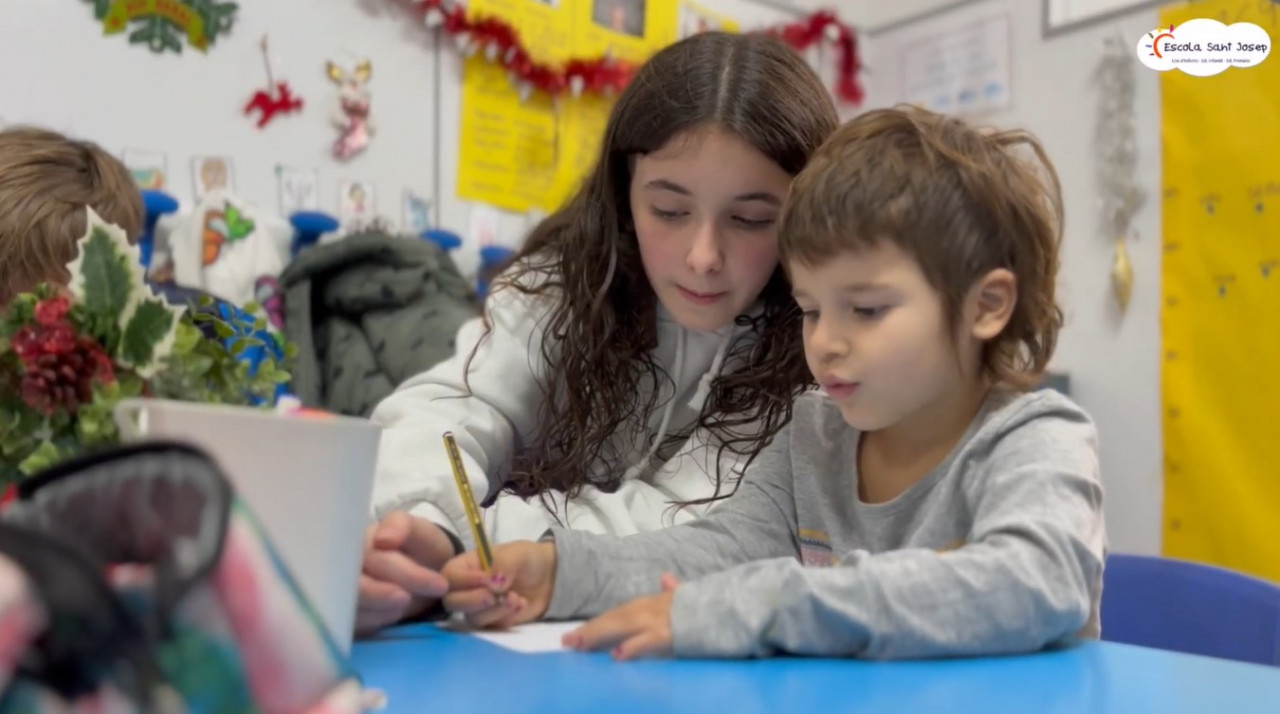
The Padrins-Fillols project is one of the most special initiatives at Escola Sant Josep, designed to create positive and lasting bonds between students and strengthen coexistence at the school.
Every year, fifth-grade primary school students become mentors to first-grade students. This meaningful relationship lasts longer than just one school year: when the older students move on to sixth grade, they continue to mentor the same children, who are now in second grade. In this way, the bond is maintained for two years and becomes even deeper and more authentic.
Throughout the course, mentors and mentees share activities, reading sessions, workshops, games, and gatherings that reinforce mutual trust and emotional security. The older participants take on a guiding and modeling role, while the younger ones find in them a close and affectionate role model.
This experience promotes empathy, responsibility, self-esteem, and a sense of belonging. The Padrins-Fillols project reflects our understanding of education: growing together, sharing the journey, and building relationships that leave an indelible mark.
STEAM PROJECT
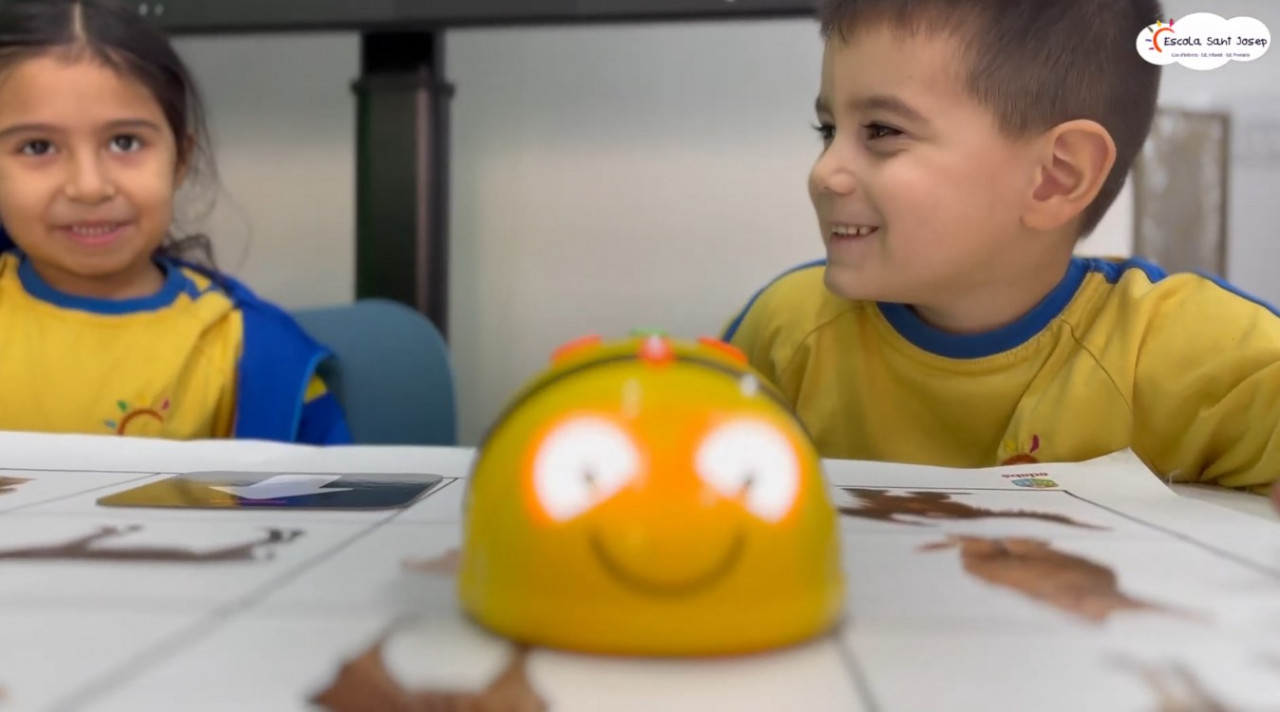
The STEAM project (Science, Technology, Engineering, Art, and Mathematics) is one of the innovative pillars of Escola Sant Josep. Through this comprehensive and competency-based approach, we offer children opportunities for exploration, creativity, and solving real-world challenges, always from an active, experimental, and meaningful perspective.
Our project integrates science and technology with art and mathematical thinking, fostering curiosity, critical thinking, and the ability to create one's own solutions. We work with manipulative materials, simple laboratories, practical experiments, and technological tools adapted to each age group.
We are part of the STEAMcat network, an initiative of the Department of Education that promotes centers committed to innovation and the development of scientific and technological thinking. This participation allows us to expand resources, share best practices, and advance an educational model that looks to the future.
From nursery school to primary school, children investigate, create, discover, and experiment through projects that connect them to the world around them. For us, the STEAM Project is an open door to curiosity, cooperative work, and the skills that will be essential in their path to growth.
LEARNING ENVIRONMENTS
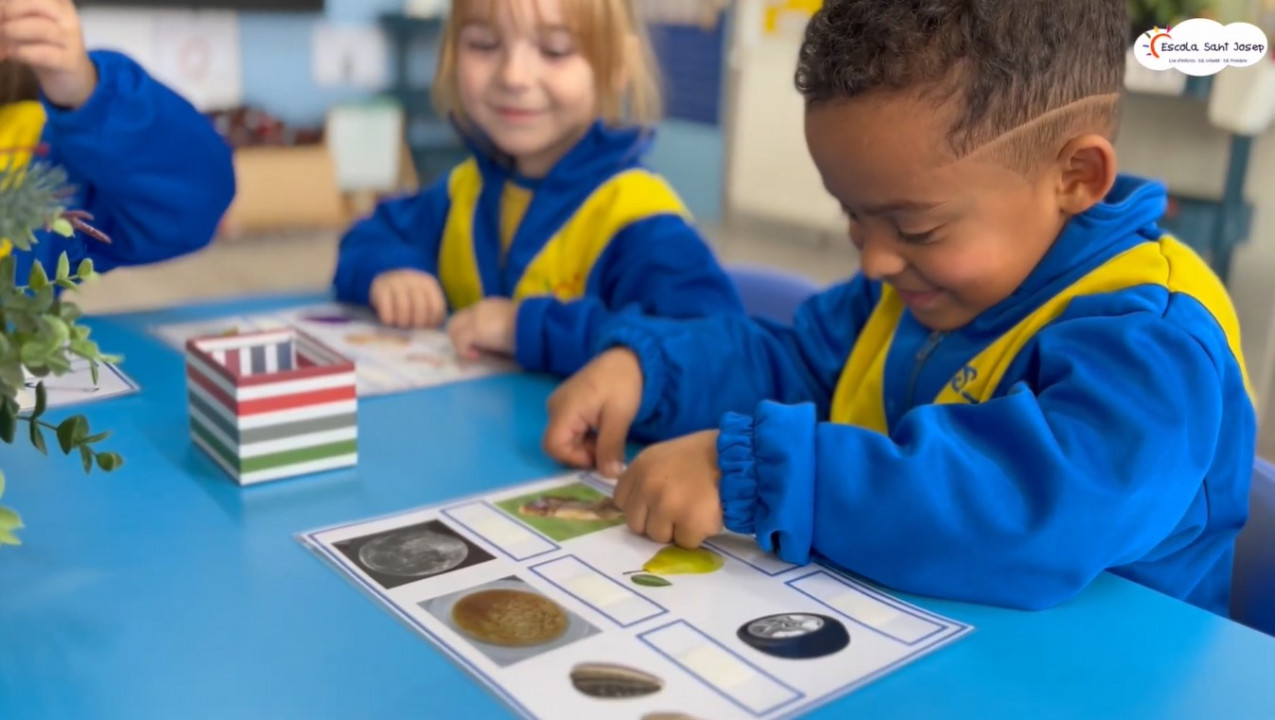
In Early Childhood Education, we work with learning environments, spaces designed so that children can explore, create, and discover through meaningful experiences. Each environment offers materials and activities that respect individual rhythms and encourage autonomy, curiosity, and play as the main tools for learning.
At Escola Sant Josep, we offer four main environments:
Scientific Environment
A space for experimenting, observing, and making small discoveries. Children manipulate materials, form hypotheses, and explore natural phenomena that spark their curiosity and critical thinking.
Artistic Environment
A creative environment where children can express themselves freely using different techniques and materials. Painting, collage, modeling, and other artistic activities that encourage imagination, expressiveness, and a taste for art.
Ambient of Transfers
A sensory space that invites children to manipulate water, sand, grains, and other materials. This environment promotes fine motor skills, concentration, and calm through manipulative play.
Symbolic Game Environment
An environment where children can reenact everyday situations, take on roles, and invent stories. This environment is key to language development, socialization, and emotional understanding.
The environments are an essential part of our daily lives in Early Childhood Education and allow us to offer a respectful, lively, and meaningful way of learning, where each child finds their space to grow and enjoy themselves.